 Pay Online
 Contact Us
In Progress: Tertiary Filtration Facility Construction
Project Overview
In late March 2026, OLWS began construction on a tertiary filtration facility at our existing wastewater treatment plant. This addition will enable us to clean water to an even higher standard.
Purpose
Tertiary treatment allows us to meet new regulations and protect local water quality.
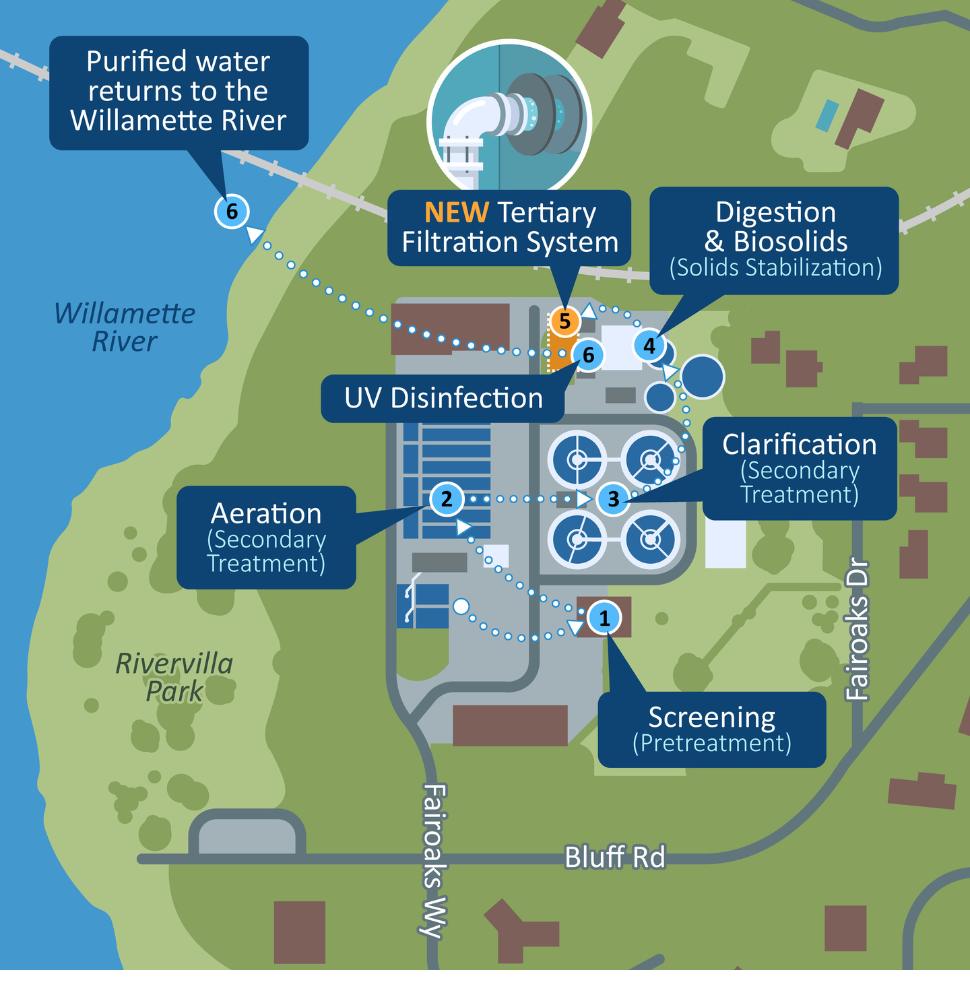
The OLWS wastewater system protects public health by collecting, treating, and cleaning approximately 1.5 billion gallons of wastewater a year. Wastewater treatment facilities play a key role in mitigating the spread of disease and in promoting healthy waterways.
OLWS is able to release treated water from our wastewater treatment plant into the Willamette River through a Department of Environmental Quality (DEQ) permit.
To meet the new requirements of our permit, we must clean our wastewater to an even higher standard. Our new tertiary treatment facility will incorporate ultra-fine filtration technology capable of removing substances that our current equipment cannot treat. The result is improved protection of local waterways, compliance with new DEQ requirements, and avoidance of costly fines.
| Project Timeline | Total Cost |
|---|---|
| 2026 - 2027 (construction expected to start March 2026) | $12.5 million |
| Project Contact | Phone | |
|---|---|---|
| Aaron Janicke | (503) 353-4212 | aaron.janicke@olws.org |
Potential Project Impacts
Work hours: Monday-Friday, approximately 7 A.M. - 5 P.M.
Because construction is only happening within our treatment plant property, impacts to the community should be minimal.
There may be some noise or dust during work hours, and crews will bring in heavy machinery to the worksite via local roads.
If you're experiencing impacts beyond what's typical for construction, please contact us directly.
Project Schedule
In late March, crews will start staging, which means transporting equipment and materials to the work site and starting pre-construction tasks. We will periodically post construction progress updates to this page to keep you informed.
Frequently Asked Questions
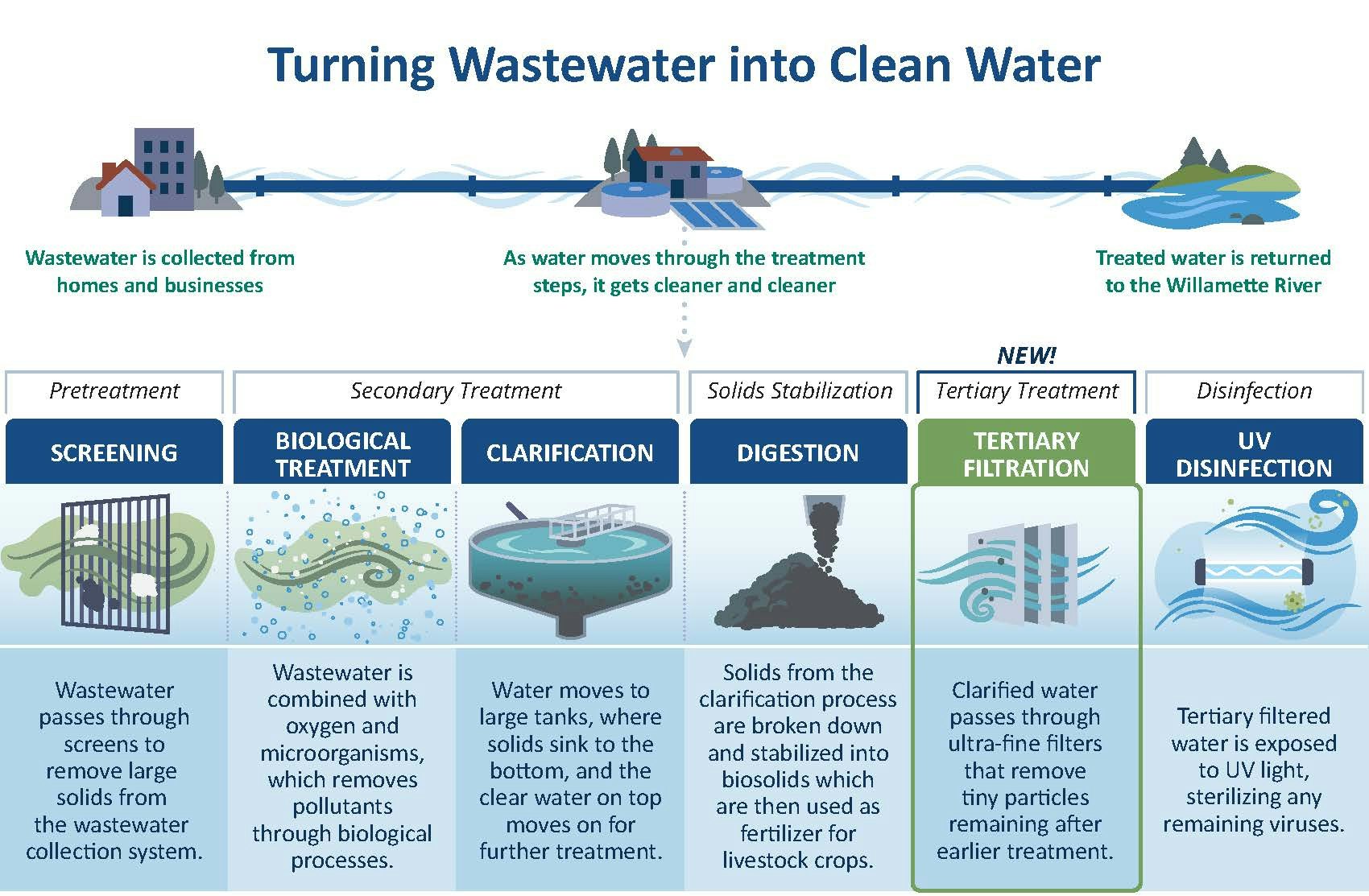
How does wastewater treatment, and the new tertiary facility, work?
In tertiary treatment, water that has gone through primary and secondary stages then passes through a series of ultra-fine filters to remove stubborn substances before moving to UV disinfection.
How is the project funded?
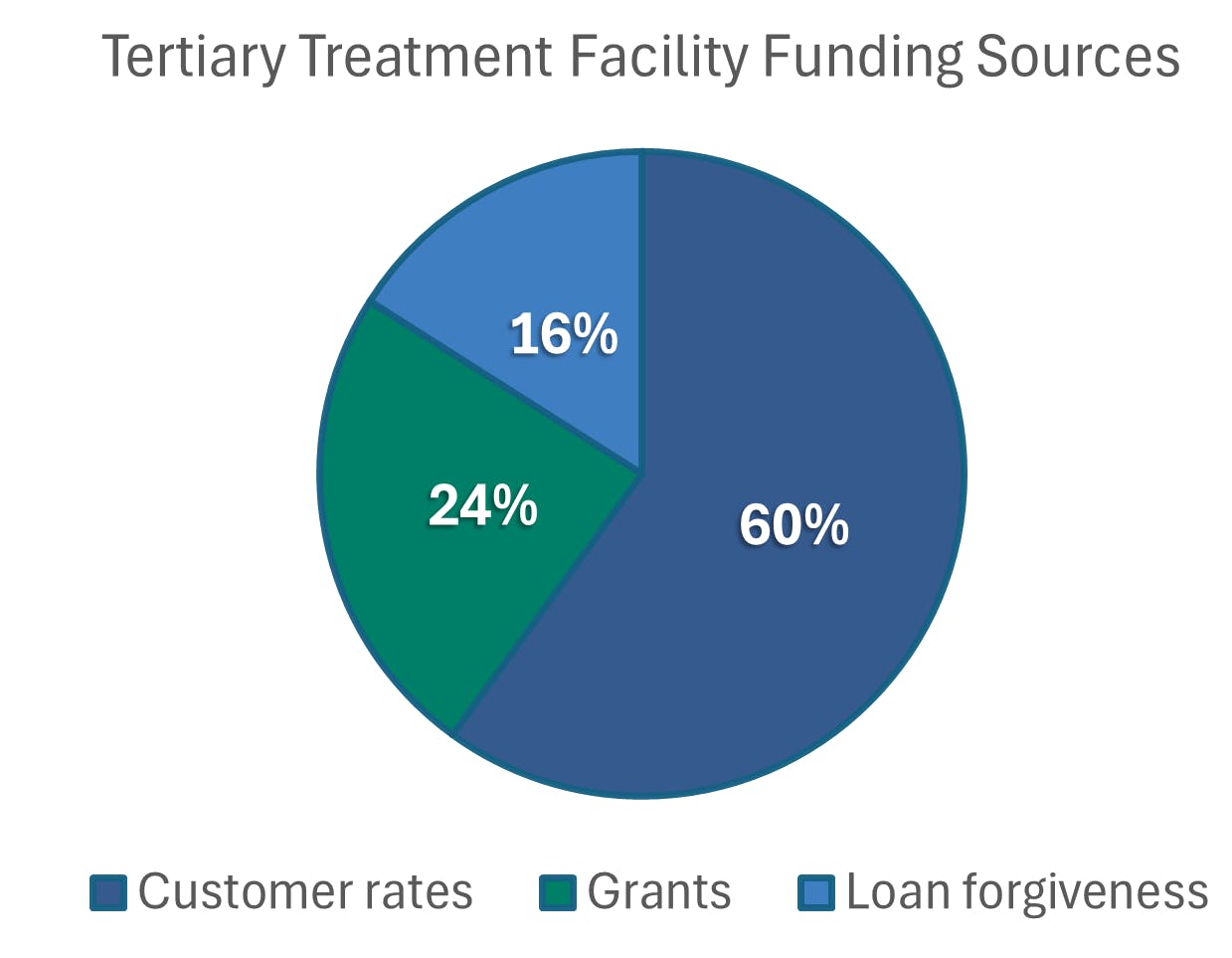
Customer rates, state grants, and loans will fund this vital investment.
As part of our biggest wastewater treatment plant update in more than a decade, we knew adding a tertiary treatment facility would be costly. The project was originally scoped at $14 million, but it’s now headed into construction for significantly less: approximately $12.5 million. Several factors helped us reduce the cost burden to ratepayers:
- Competitive Bidding: Under a lowest-bid procurement system, the contract is awarded to the bidder offering the lowest price that fully complies with the specified requirements. This system protects ratepayer interests by ensuring objectivity, increasing competition, and maximizing cost savings.
- Outside Funding: By conveying the importance of updating wastewater treatment infrastructure, we secured a $3 million state grant to offset costs.
- Loan Forgiveness: We have also secured $2 million in loan forgiveness through the DEQ.
What will it look like?
You can take a virtual tour of the new facility here. If you would like to take an in-person tour of the treatment plant, please email info@olws.org.